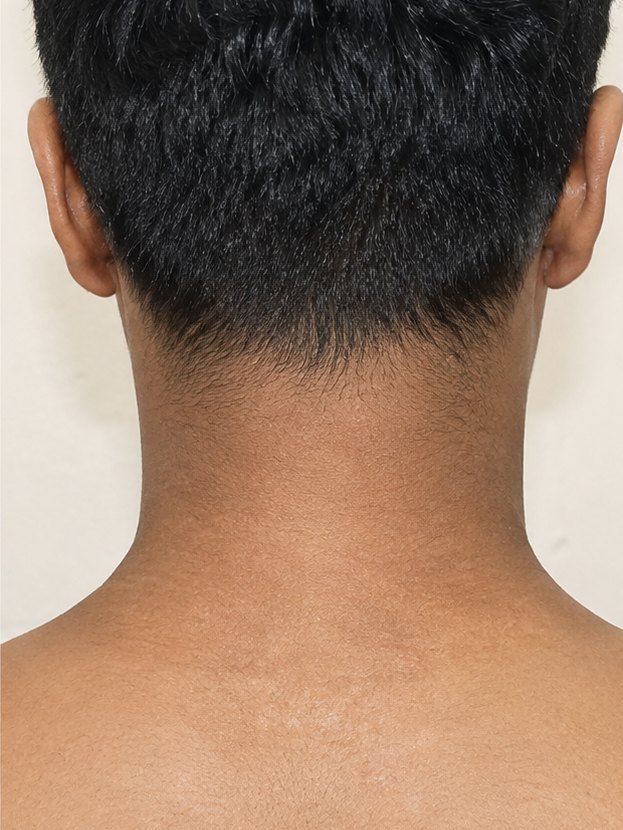
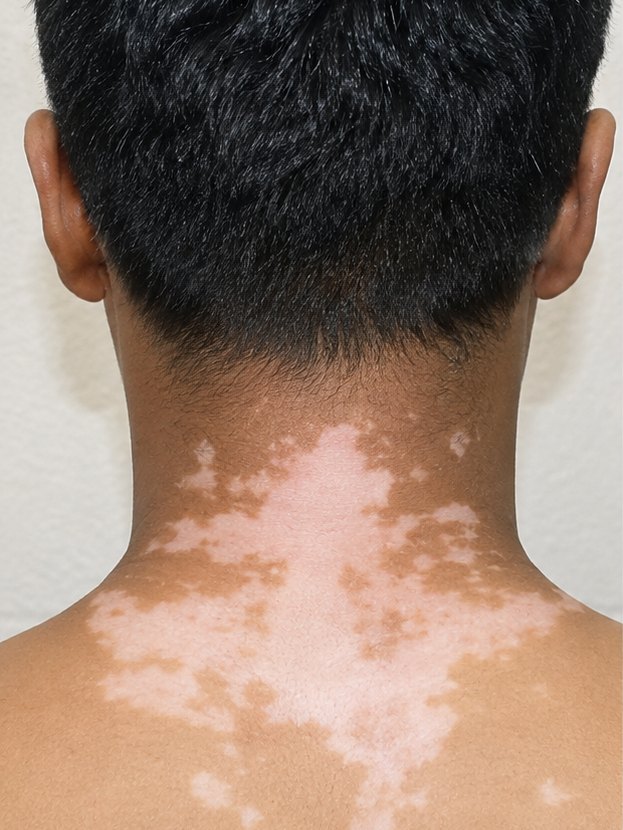

Neck & upper back
- Age
- 24 · Male
- History before treatment
- 2 years, actively spreading
Trunk and neck patches sit over dense follicles and a rich blood supply, which is why they respond faster than anywhere else on the body.
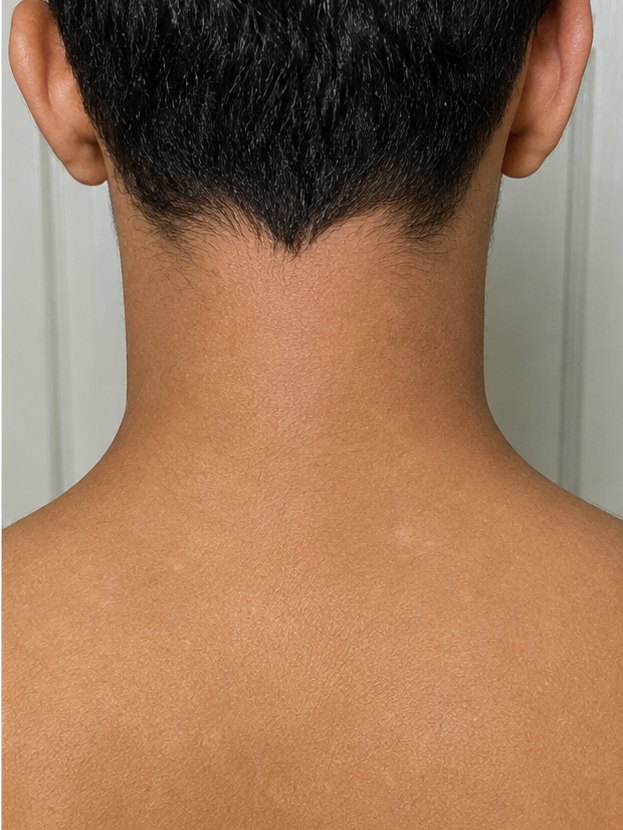
No stock photos and no borrowed miracle cases. What follows is the honest mechanism — how pigment actually returns, how long each stage takes, and which patches respond least. Your own progress is documented in photographs from day one.


Trunk and neck patches sit over dense follicles and a rich blood supply, which is why they respond faster than anywhere else on the body.

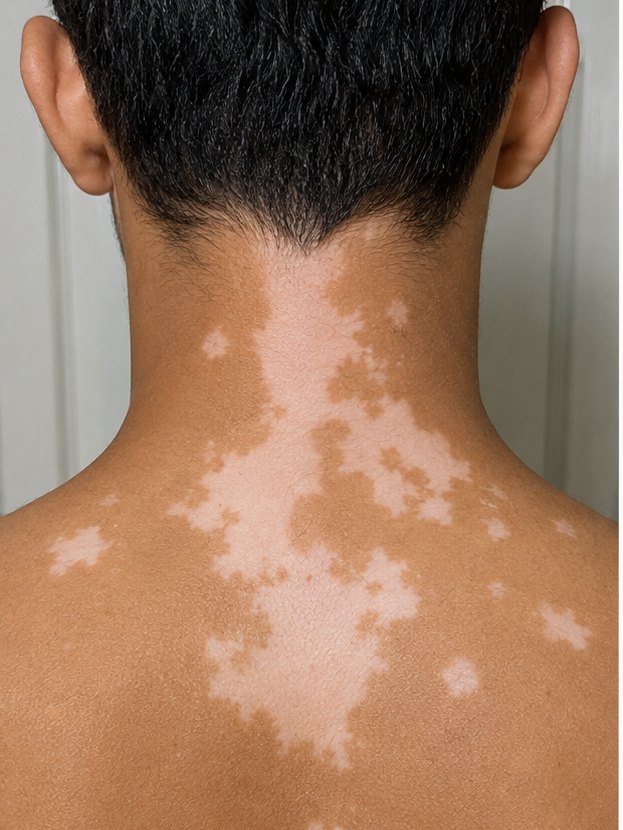
Spread halted in week 7. A faint outline remained at the shoulder where the patch had been longest.


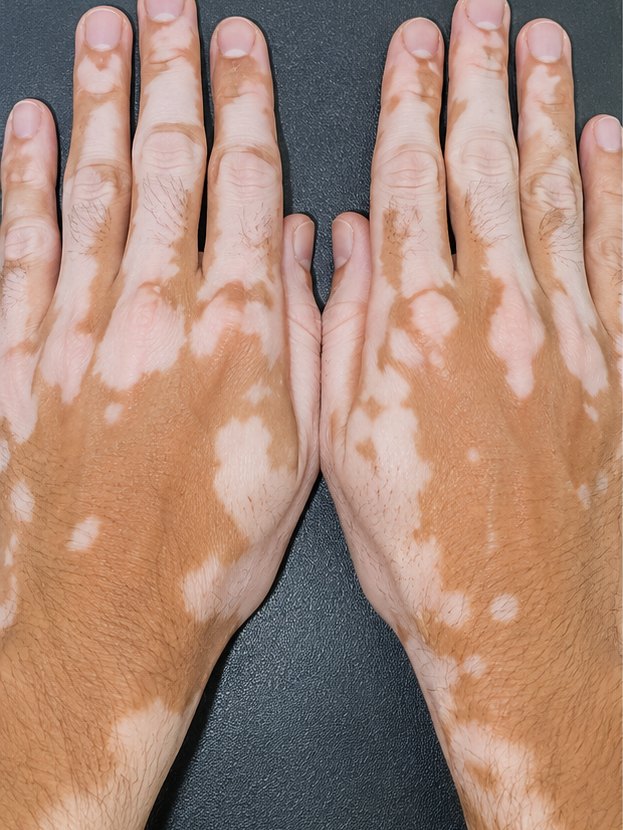
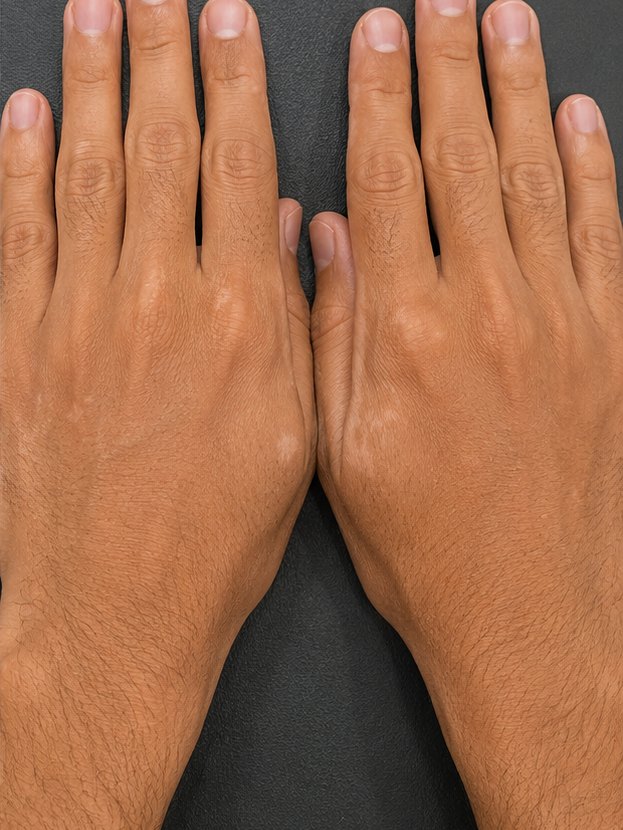
Hands are among the slowest areas on the body — few follicles and constant friction. Eleven months for a partial close, and the fingertips remain lighter.


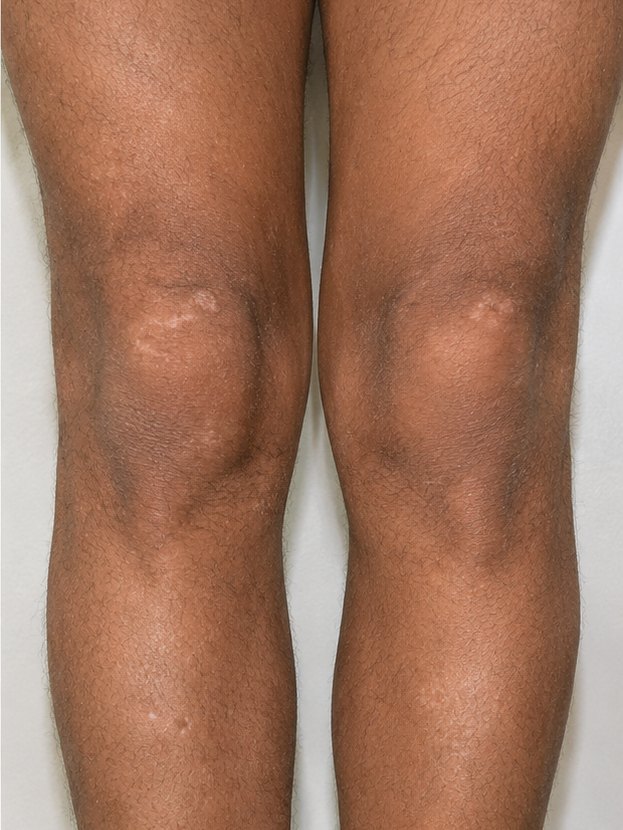
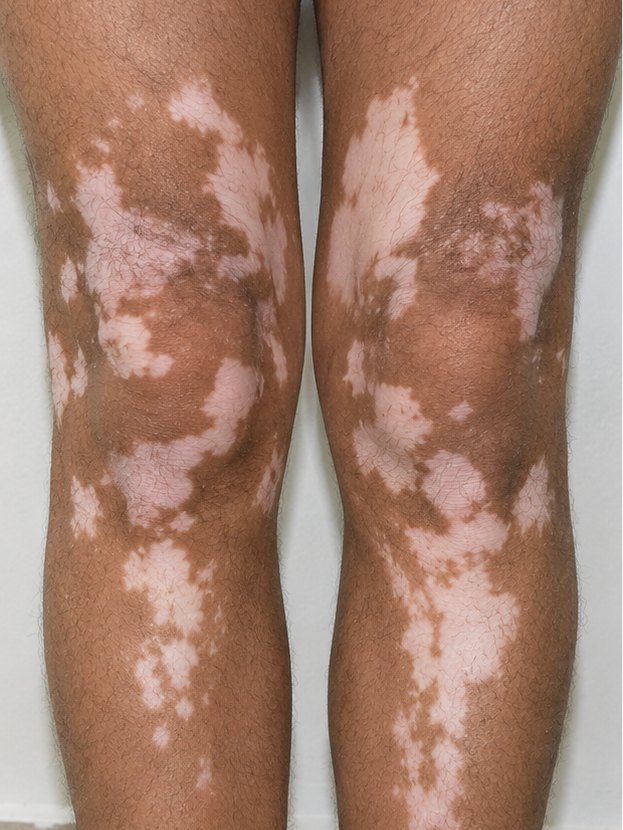
Symmetrical knee patches point to internal auto-immune activity. Thyroid was checked and corrected alongside. Small patches remain over both kneecaps.


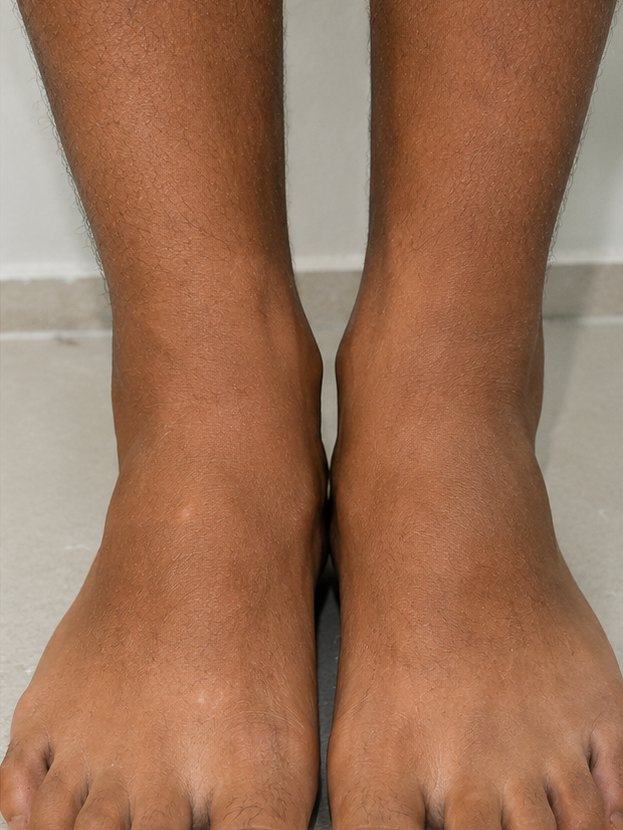
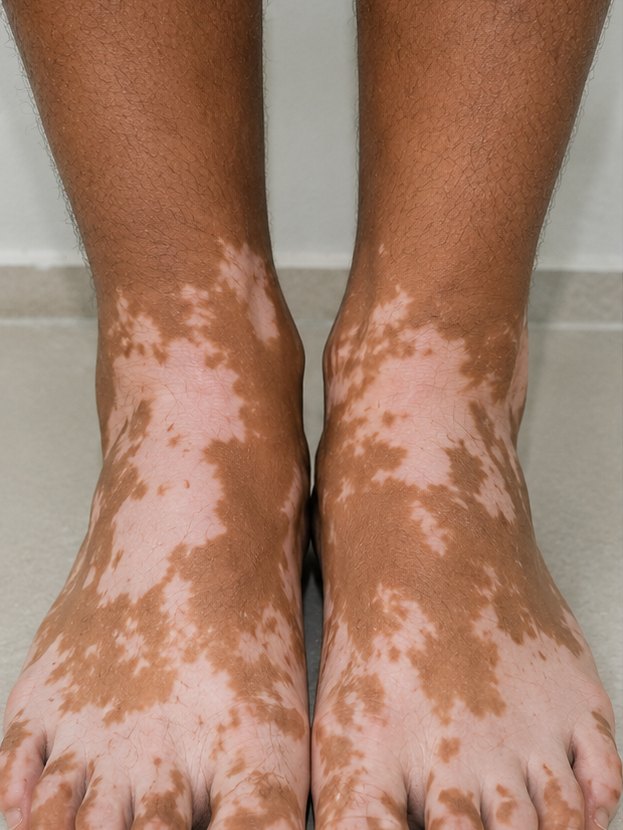
Feet respond least of all. Twelve months of consistent treatment for a partial result — we tell patients this before they start, not after.


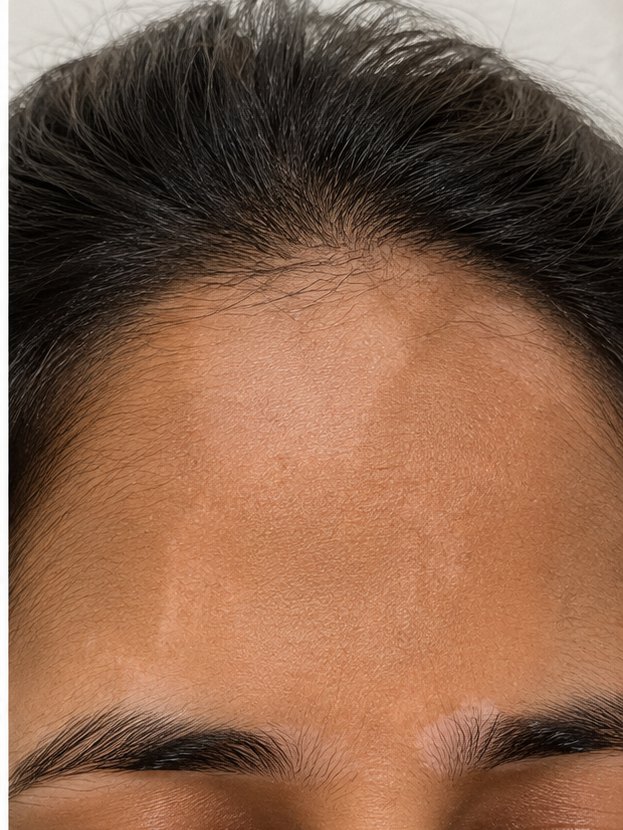
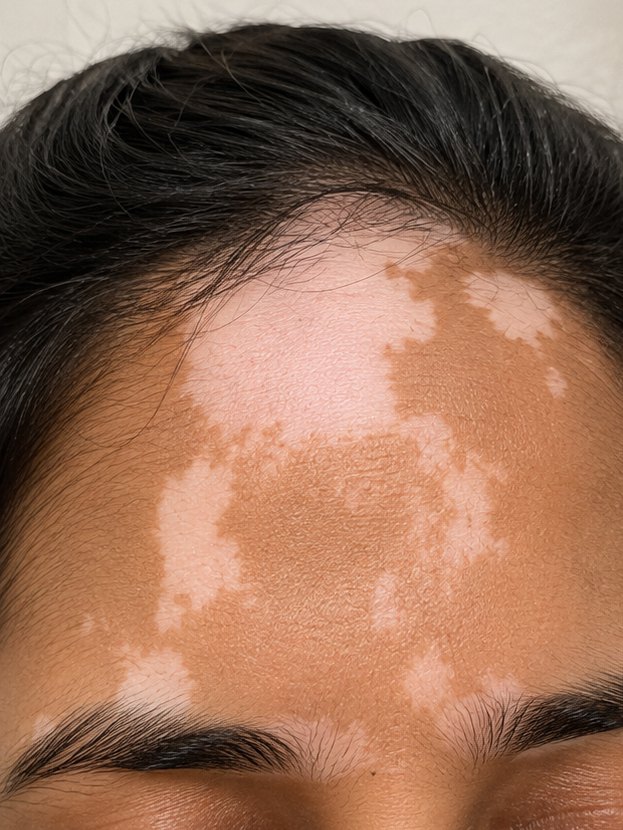
Facial patches respond fastest. Hormonal trigger identified at the first consultation and managed in parallel with the pigment work.


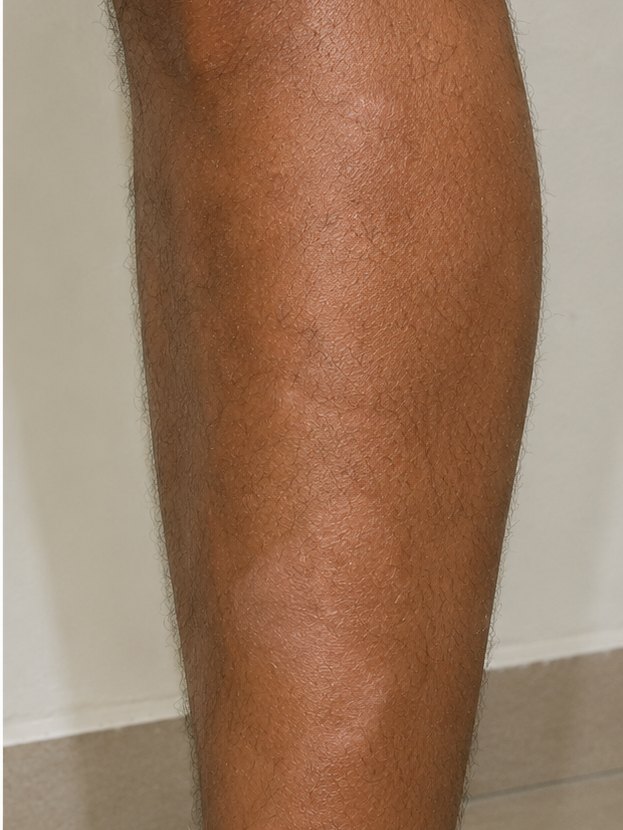
Caught within the first two years and confined to one segment — the presentation that consistently gives the best response.
Photos published with written patient consent.
Almost everyone imagines the whole patch slowly darkening. That is not what happens. Colour returns as separate islands seeded from the hair follicles inside the patch — which is exactly why the areas with fewest follicles are the slowest.
Diagram, not a patient photograph — drawn to show the mechanism. Real progress is slower and less even than any illustration, and how far it goes depends on where your patches are and how long you have had them.
Follicle density decides almost everything. These are the honest ranges we quote at the assessment — not best cases.
| Area | Typical response | Why |
|---|---|---|
| Face, neck, trunk | Best | Dense follicles and rich blood supply. Many patches close fully. |
| Upper arms, thighs | Good | Responds well, usually a little slower than the face. |
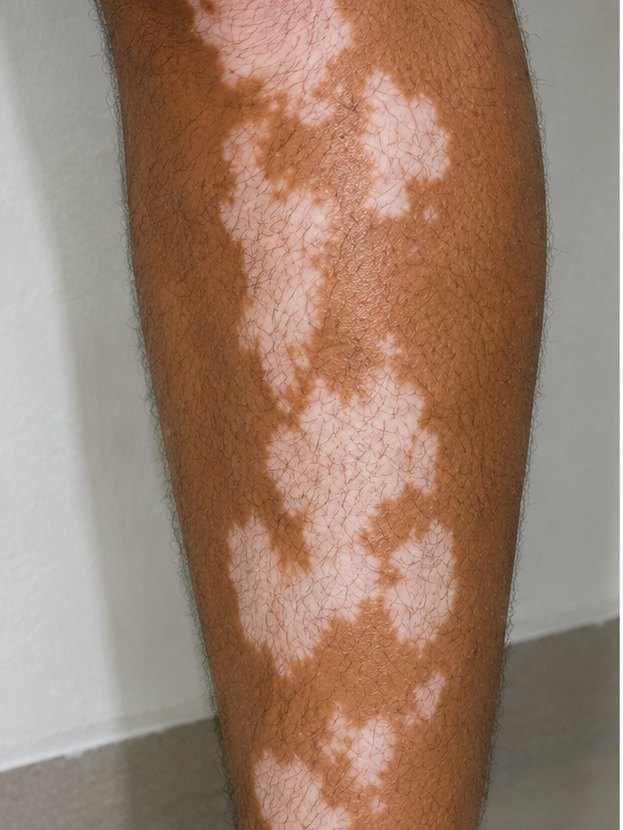
| Elbows, knees, shins | Moderate | Fewer follicles and constant friction over the joint. |
| Hands, fingers, feet, toes | Slow, often partial | The fewest follicles on the body. Expect improvement, rarely a full close. |
| Lips and mucosa | Slowest | Almost no melanocyte reservoir here. Progress is gradual and partial. |
| Any patch with white hair | Limited | The follicle reservoir is depleted. Slower and usually incomplete — but not hopeless. |
Dense follicles and rich blood supply. Many patches close fully.
Responds well, usually a little slower than the face.
Fewer follicles and constant friction over the joint.
The fewest follicles on the body. Expect improvement, rarely a full close.
Almost no melanocyte reservoir here. Progress is gradual and partial.
The follicle reservoir is depleted. Slower and usually incomplete — but not hopeless.
Vitiligo is a chronic auto-immune condition. Results vary from person to person and depend on how long you have had the patches, how much skin is involved, and how closely the protocol is followed. Nothing on this site is a guarantee of outcome or a substitute for an in-person medical examination.
Send photographs of your patches. We will tell you which pattern you fall into, what is realistically achievable, and whether treatment is worth your money — free, and honestly.